
Aluminum Pallet Collars for Corrosive Industrial Environments
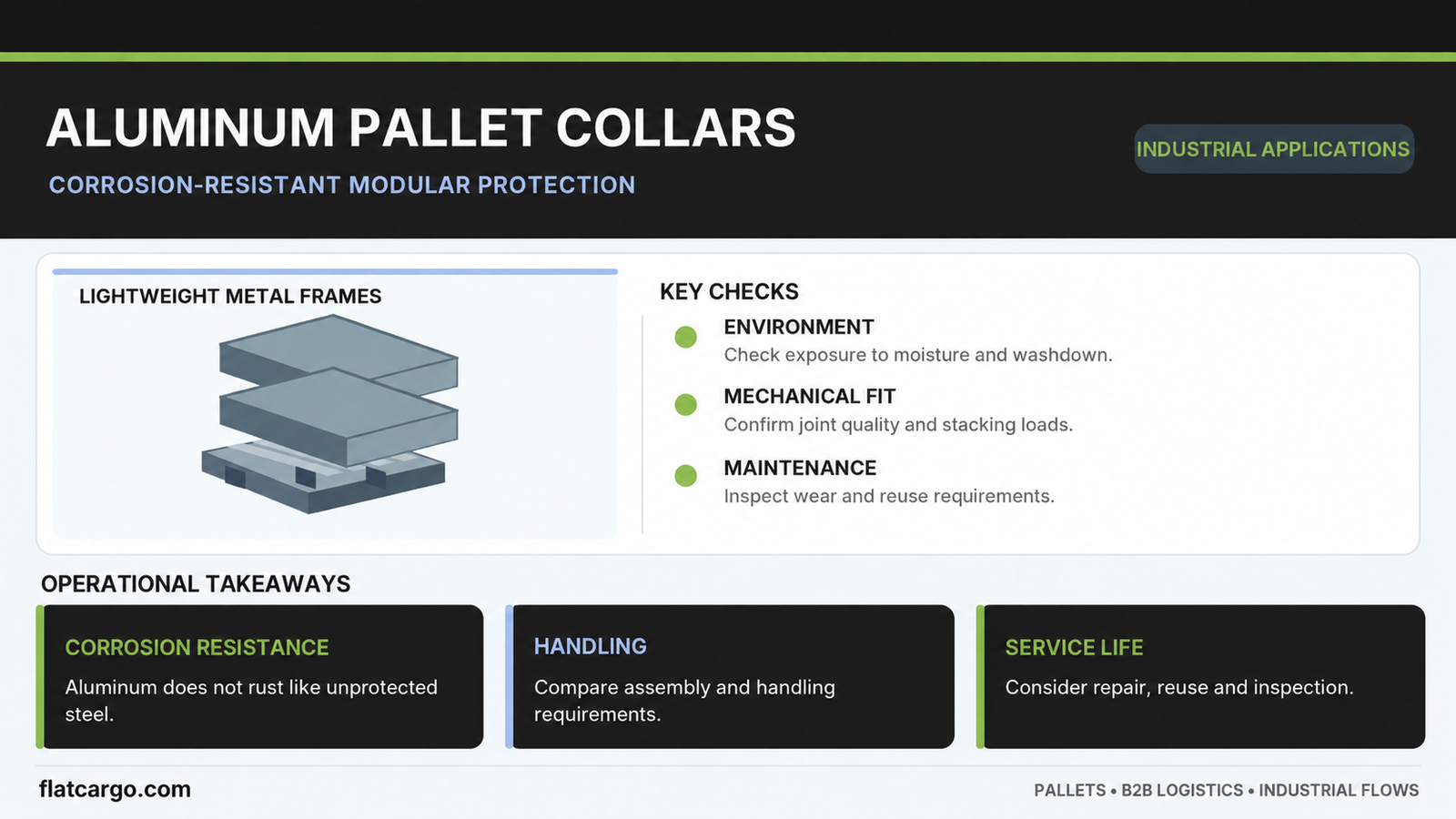
Aluminum Pallet Collars in Corrosive Environments
In humid, coastal or chemically exposed facilities, pallet collars must suit the actual environment, cleaning routine, load and handling conditions. Aluminum pallet collars can be an option where corrosion control, cleanability or lower tare weight matters.
Material compatibility and service conditions
Aluminum forms a natural oxide layer, but that does not make every alloy or design corrosion-proof. Performance depends on the alloy and temper, surface finish, joints and fasteners, as well as exposure to salts, chemicals, cleaning agents and dissimilar metals. Check compatibility against the operating conditions before specifying a collar.
| Exposure or requirement | Aluminum collar | Wood collar | Coated steel collar |
|---|---|---|---|
| Moisture and salt | Assess alloy, finish, joints and exposure; suitability varies by environment. | Moisture can affect the material and may require specific handling or treatment. | Corrosion protection depends on the coating and its condition. |
| Chemical exposure | Check compatibility with the specific chemicals and cleaning agents. | Absorption and material condition depend on the liquid and the wood treatment. | Verify both the base material and coating against the chemicals used. |
| Cleaning | Cleanability depends on the design, joints and approved cleaning procedure. | Porosity and construction can make cleaning more demanding. | Inspect the coating and joints as part of the cleaning and maintenance routine. |
For a lifecycle comparison, include purchase, inspection, cleaning, repairs, transport and end-of-life handling, not just the initial purchase price.
Why Use Aluminum Pallet Collars in Demanding Industrial Environments?
The choice of collar material should reflect the operating environment and the requirements of the goods being handled. Aluminum may be suitable where tare weight, cleaning access or exposure to moisture is a concern, provided the product specification matches the use case.
Corrosion behaviour and chemical exposure
The protective oxide layer on aluminum is useful in many applications, but corrosion behaviour still depends on alloy, surface condition and exposure. Chlorides, pH, cleaning products and contact with other metals can affect performance. A material review should therefore use the actual process conditions rather than a general claim of “corrosion resistance.”
Tare weight, handling and full-truckload transport
Aluminum is less dense than steel, and a suitably designed collar may have a lower tare weight. Compare the measured weight of the complete units, including joints and fittings. A lighter collar does not automatically increase legal payload: vehicle limits, load dimensions and the weight of the goods remain decisive. For full-truckload planning, see our guide to full-truckload pallet purchasing.
| Performance factor | Aluminum | Coated steel |
|---|---|---|
| Corrosion behaviour | Depends on alloy, finish, joints and exposure. | Depends on coating integrity, inspection and exposure. |
| Unit weight | Confirm the weight of the specified collar and fittings. | Confirm the weight of the specified collar and fittings. |
| Inspection and maintenance | Set inspection and cleaning requirements for the actual use conditions. | Include checks for coating damage, joints and signs of corrosion. |
Flat Cargo’s metal pallet range provides a starting point for comparing available equipment and specifications.
Where Aluminum Pallet Collars May Be Suitable
Aluminum collars may be considered in operations where the material, product design and handling process meet site requirements. Suitability should be confirmed for the specific application rather than inferred from the material alone.
Food and pharmaceutical operations
Food hygiene depends on the full cleaning and handling system. A pallet collar’s material alone does not establish HACCP compliance. Review the product design, joints, cleanability, cleaning procedure and risk of contamination within the site’s hygiene plan. Our guide to pallets and food-hygiene requirements provides related context.
Explosive-atmosphere areas
Aluminum should not be assumed to be non-sparking or automatically suitable for an ATEX area. The equipment, surrounding materials, handling method and site risk assessment all matter. Confirm suitability with the responsible safety specialist against the applicable zone and operating conditions.
Coastal and marine environments
Salt and persistent moisture can affect equipment and coatings. In coastal use, assess the specified alloy, finish, fasteners, cleaning routine and inspection plan. Do not treat aluminum as immune to corrosion in saline conditions.
For a site-specific review of packaging, handling and material constraints, see Flat Cargo’s packaging audit service.
Assess the Total Cost of Ownership
The initial purchase price is only one part of a collar’s cost. A useful comparison considers the operating conditions and the evidence available from the site.
Inspection, cleaning and operational reliability
Set inspection and maintenance requirements based on the product specification and actual use. Compare cleaning time, repairs, replacement history and any disruption caused by damaged equipment. Avoid assuming that any material requires no maintenance.
Residual value and end-of-life handling
Aluminum is widely recyclable, but its residual value depends on market conditions, material condition, collection arrangements and processing costs. Include realistic end-of-life assumptions in the comparison rather than treating resale or recycling value as guaranteed.
For a broader view of reuse and recovery economics, read Pallet Pooling vs Recovery Costs. Flat Cargo’s pallet price barometer can also support a purchasing discussion.
Coastal-Site Assessment: Compare Collar Options
For a coastal production or storage operation, compare the current collar system with any proposed aluminum option using site records and product specifications. The comparison should cover exposure, cleaning, maintenance, tare weight and transport. Without measured results, describe the operating factors rather than claiming quantified savings.
Operational factors to review
| Assessment area | Current collar system | Aluminum option |
|---|---|---|
| Exposure and condition | Record the effects of salt, moisture, cleaning and coating condition. | Check the specified alloy, finish, joints and fasteners against the same exposure. |
| Maintenance and replacement | Use inspection records, repair history and replacement data. | Set inspection criteria and compare performance over a documented evaluation period. |
| Weight and transport | Measure the complete unit and model the current load configuration. | Measure the specified unit and recalculate loads against vehicle and legal limits. |
| Lifecycle cost | Include purchase, cleaning, repairs, replacement and disposal. | Use supplier data and site measurements for purchase, upkeep, freight and end-of-life assumptions. |
A material change should be based on documented compatibility and operating data. For available specifications, see the metal pallet catalogue.
Choose Aluminum Collars Against Your Operating Requirements
Aluminum pallet collars can be worth assessing where corrosion exposure, cleanability or tare weight affects logistics performance. The right choice depends on the specified product, site conditions, handling process and documented lifecycle costs. Verify compatibility and operating assumptions before changing materials.
Share your dimensions, load, environment and handling requirements with Flat Cargo to discuss a suitable option.
FAQ
How do aluminum pallet collars perform under repeated mechanical impact?
Performance depends on the alloy, profile design, joints, load and handling method. Aluminum can dent or deform under impact. Inspect the collar after significant contact and follow the supplier’s criteria for repair or replacement.
Can aluminum pallet collars be made in non-standard dimensions?
Custom dimensions may be possible, subject to the load, handling equipment, locking system and production requirements. Provide the required dimensions and operating conditions for an engineering review through Flat Cargo’s custom-design service.