
Pallet Security: Industrial Stretch Film Optimization
Pallet Security and tertiary packaging optimization
Materials science and high elastic memory
Plastic reduction at the source and CSR trajectories
Flat Cargo supports professionals in optimizing their wrapping processes. By prioritizing materials with high elastic memory and eco-designed solutions, we allow your logistics to reconcile flawless load stability with plastic reduction imperatives. This approach not only secures your goods but significantly improves your packaging TCO and your compliance with CSR policy.
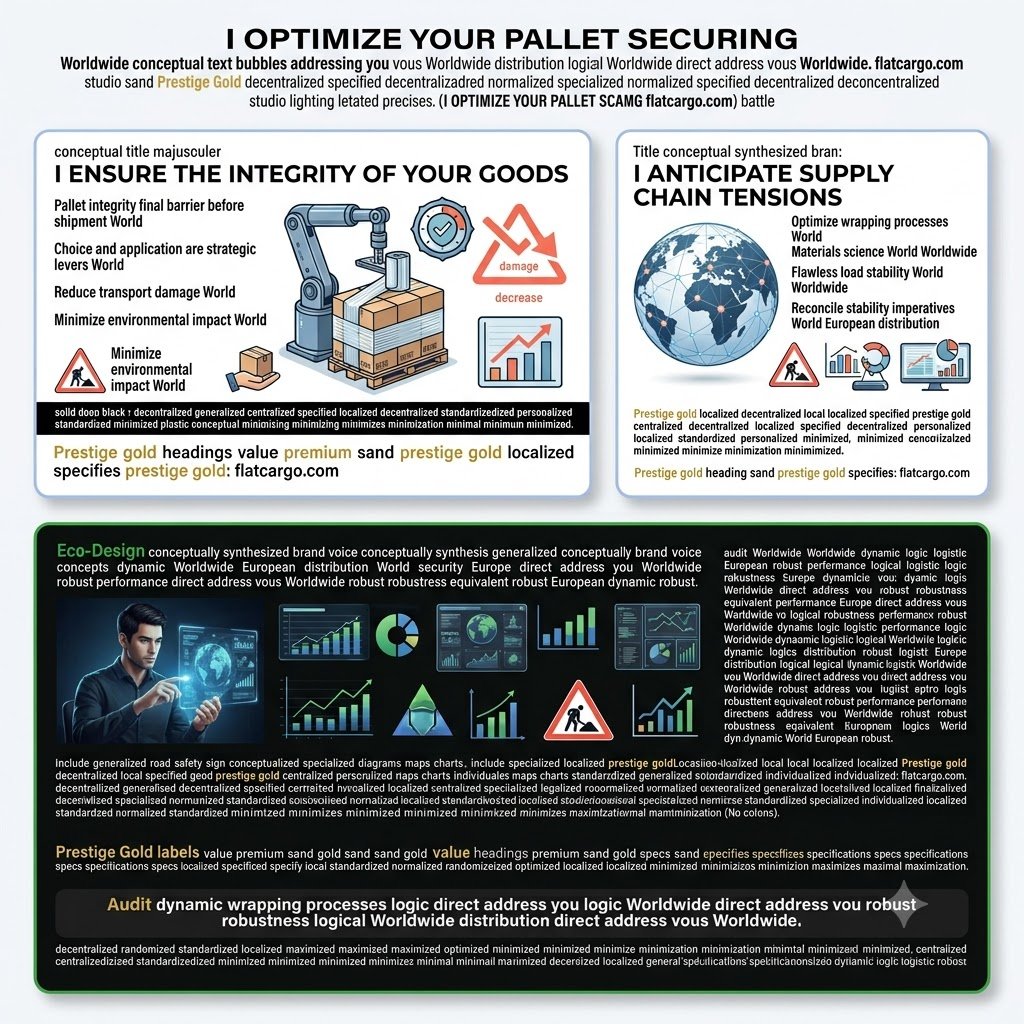
Mechanical principles of load cohesion through stretch wrapping
Elastic memory and holding force of high-performance films
Differentiation between manual stretch film and automatic application
Application calibration and industrial repeatability
The application method influences consumable consumption and load unit stability. Manual wrapping relies on the physical strength of the operator, which can lead to uneven tension. Conversely, using automatic wrapping machines allows for calibrated application with a constant pre-stretch rate. This mechanization guarantees that each pallet receives the exact amount of material required, ensuring repeatable load cohesion across all your current shipments.
Eco-design strategies and plastic footprint reduction
Transition to pre-stretched and bio-sourced films
Extreme thinness and structural integrity
The major innovation lies in the development of high-performance pre-stretched films. These films maintain exceptional holding force while being significantly thinner, allowing the tonnage of plastic used per pallet to be halved. In parallel, the integration of recycled polyethylene (PCR) reduces dependence on fossil resources. By adopting these solutions, you align your processes with CSR sustainability trajectories.
| Type of Solution | Technical Benefit | CSR Impact / Cost |
|---|---|---|
| High-performance pre-stretched film | Extreme thinness and high tension | 50% reduction in plastic tonnage |
| Recycled polyethylene (PCR) | Maintained mechanical properties | Circular economy and decarbonization |
| Automated application | Standardization of holding force | Lower unit cost and MSD prevention |
Impact of securing on the reduction of transport disputes
Control of hidden costs related to handling damage
Claims rate and customer value preservation
The real cost of a collapsing pallet far exceeds the value of the destroyed products. It includes administrative time, insurance fees, and final customer dissatisfaction. By using high elastic memory films, you ensure perfect cohesion between the packages and the pallet. This structural cohesion drastically reduces your claims rate, secures your business relationships, and optimizes your transport TCO through constant delivery reliability.
Performance study on plastic deposition rate optimization
The operational challenge
A beverage industry manufacturer used a classic 23-micron stretch film with manual wrapping. Despite consuming 800g of plastic per pallet, load shifting was frequent, resulting in a 3% claims rate.
The Flat Cargo solution
Transition to a high-performance 12-micron pre-stretched film coupled with an automatic wrapping machine. The reduction in thickness optimized packaging TCO while increasing structural rigidity.
| Performance Indicator | Initial Solution (23µ Manual) | CIRCUL-R Optimization (12µ Auto) |
|---|---|---|
| Plastic consumption per pallet | 800g | 350g (56% savings) |
| Measured holding force | Variable and insufficient | Constant and compliant |
| Transport claims rate | 3% | 0.4% (86% reduction) |
Overall result By halving its annual plastic tonnage, the company not only reduced its purchasing costs but also eliminated the majority of damage, aligning its performance with current CSR sustainability commitments.
Lifespan and recyclability of polyethylene films
One of the major assets of industrial stretch film lies in its low-density polyethylene (LDPE) composition, a fully recyclable mono-material. In a CIRCUL-R approach, film end-of-life management becomes a recovery opportunity. Once used, the film can be collected and transformed into new resins, which are then reinjected into the manufacturing of recycled supports. By structuring efficient source separation, you transform handling waste into a valuable resource, minimizing the overall environmental impact of your pallet logistics.
FAQ on packaging consumables management and CSR standards
Protection against moisture and long-term storage
Stretch film plays an essential barrier role. For pallets stored in damp environments, applying a pallet top sheet before wrapping guarantees complete waterproofing. This technique prevents water infiltration and protects the structural integrity of your primary packaging within your pallet logistics. By securing your load units in this manner, you optimize your packaging TCO by avoiding losses related to mold or cardboard softening.
Selection criteria for a reduction at the source strategy
To succeed in your transition toward greener logistics, the main criterion must be the yield per linear meter. A film that is more expensive per kilogram but allows for superior stretching will systematically be more cost-effective and eco-friendly. The objective is to reach the minimum breaking point to meet the requirements of the PPWR directive. This optimization requires a regular packaging audit to adjust your wrapping settings to the weight variations of your current pallets.
Conclusion on pallet securing optimization
Pallet securing is a precision discipline that reconciles asset protection and environmental responsibility. By moving from a mass consumption logic to a film engineering approach, you reduce your operational costs while improving the reliability of your shipments.
Flat Cargo supports you in this shift toward high-performance wrapping solutions, transforming each unit into a guarantee of quality and an act of commitment to the climate. Secure your compliance with the PPWR directive today and perfect your current pallet logistics.
Optimize your wrapping and reduce your waste
Secure your loads with 50% less plastic thanks to our expert solutions.