
Pallet Transport Innovations and Digital Workflow Transformation
Pallet transport innovations represent a major technological breakthrough in modern supply chain management. Long considered a simple passive consumable, the load carrier is now becoming a smart, connected asset. In a logistics ecosystem where data has become the engine of performance, integrating advanced technologies makes it possible to transform opaque flows into a fully transparent supply chain driven by key performance indicators.
For decision-makers, adopting these disruptive solutions addresses a triple challenge by optimizing freight costs, reducing environmental footprints, and radically improving customer satisfaction. Flat Cargo decodes the drivers of innovation that are redefining the standards for your current shipments.
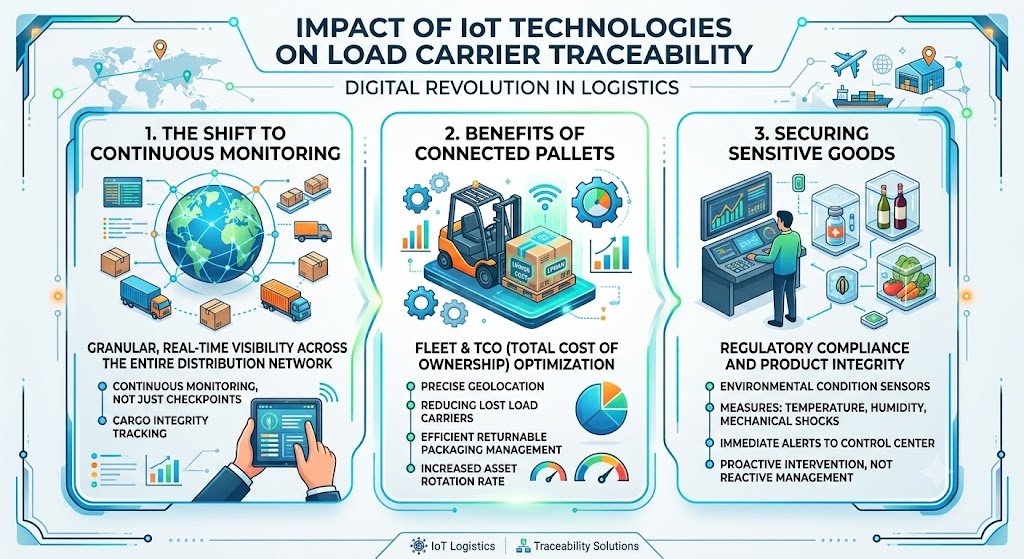
Impact of IoT technologies on load carrier traceability
Benefits of connected pallets for real-time tracking
Securing sensitive goods with smart sensors
Active monitoring and compliance
Beyond geographical position, pallet transport innovations now integrate environmental condition sensors. These devices continuously measure the temperature, humidity levels, and mechanical shocks experienced by the goods. For the pharmaceutical, luxury, or food sectors, this technology guarantees regulatory compliance and the structural integrity of the products. If a threshold is exceeded, an immediate alert is transmitted to the control center, allowing for proactive intervention before damage becomes irreversible. This marks the end of reactive management in favor of total safety for your current flows.
Artificial intelligence and transport schema optimization
Reducing empty mileage through Machine Learning
Demand forecasting and proactive pallet fleet management
| AI application area | Technological innovation | Operational benefit |
|---|---|---|
| Flow planning | Predictive demand algorithms | Elimination of carrier stockouts |
| Transport execution | Real-time route optimization | Reduction in fuel costs and CO2 |
| Asset maintenance | Image analysis for pallet condition | Preventive securing of the load unit |
Transition toward sustainable materials and circular logistics
Warehouse automation and palletizing robotics
- AGVs and AMRs: Streamlining internal transfers and reducing accidents.
- Computer vision: Automated inventory and real-time quality control.
- High-density storage: Optimization of real estate space through automated stacking.
FAQ on technological breakthroughs in the supply chain
Role of Blockchain in securing logistics exchanges
Among the most promising pallet transport innovations in 2026, Blockchain stands out as the ultimate trust protocol. By creating a decentralized and immutable ledger of every pallet movement, it eliminates disputes related to transfers of responsibility between different actors in the chain. Each "smart contract" automatically triggers billing or replacement processes as soon as a connected pallet crosses a checkpoint. For your current flows, this technology guarantees total data integrity and a massive reduction in administrative costs associated with manual tracking.
Profitability of technological investments for SMEs
Access to pallet transport innovations is no longer reserved solely for industry giants. The democratization of SaaS (Software as a Service) solutions and the falling cost of IoT sensors allow SMEs to begin their digital transition with a controlled initial investment. The ROI is quickly measured by the elimination of lost carriers, load optimization, and premium customer service. In current logistics, ignoring these advancements represents a risk of losing competitiveness to more agile and technologically better-equipped actors.
Conclusion on the future of intelligent load carrier management
Pallet transport innovations shape the outlines of an autonomous, sustainable, and highly efficient supply chain. From IoT-connected pallets to route optimization powered by AI, each technological block helps create an ecosystem where operational efficiency meets ecological imperatives. By adopting these solutions, you do more than modernize your carrier fleet; you secure your company's future in a globalized and demanding market. Flat Cargo supports you in this transition to make every pallet a growth driver for your current shipments.
Anticipate the shifts in your supply chain with our experts
Optimize your flows and integrate the latest technological innovations for your load carriers.