
Purchase Plywood Crates for Heavy Products & Logistics 2026
TCO optimization and eco-design of shipments
Heavy handling challenges and competitive advantage
Flat Cargo breaks down the technical and financial assets of plywood for you to transform your heavy handling challenges into a decisive competitive advantage for your current flows. By relying on this packaging technology, you not only secure your logistics budget, but you also guarantee the flawless delivery of your current shipments to the most demanding markets of 2026.
Propel your heavy logistics toward new safety standards.
Request a custom quote for your plywood crates
Custom design and resistance of industrial packaging
Specifics of plywood to secure your current flows
Volumetric optimization and profitability of current shipments
Elimination of empty transport and maximization of load rates
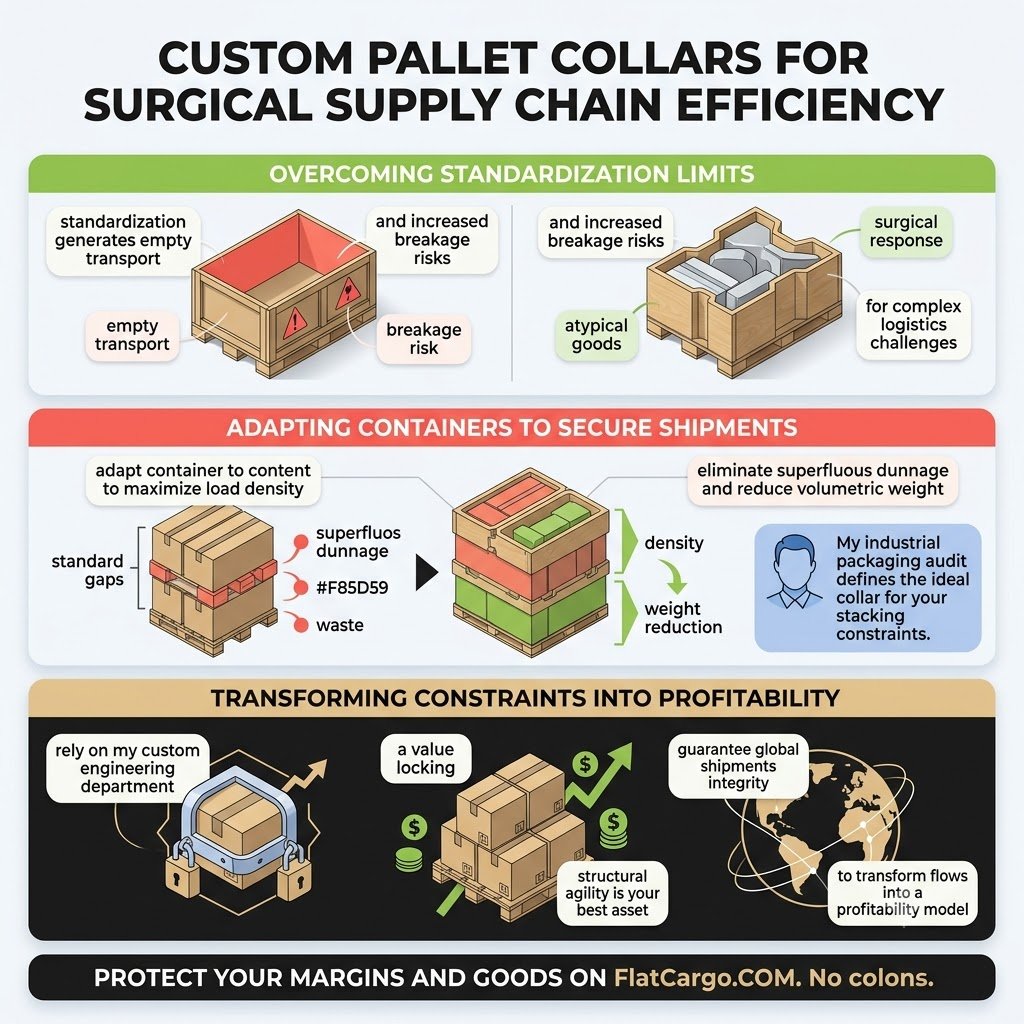
Working with a manufacturer to design custom wooden pallets combined with a plywood lid eliminates empty transport. For your current shipments, the millimeter-accurate fit of the packaging reduces space occupancy in sea containers. In 2026, this space optimization is a major lever to make the current logistics of your heavy goods profitable while preserving your logistics budget.
International standards and environmental sustainability
ISPM 15 certification for global export in 2026
Eco-responsible materials and carbon footprint reduction
Scope 3 performance and circular economy
The performance of current logistics must align with your environmental responsibility. Flat Cargo selects plywood panels from sustainably managed forests. For your current shipments, using renewable materials directly improves your carbon footprint. In 2026, the design of collapsible crates extends the packaging's lifecycle, anchoring your current flows in a true circular economy approach that optimizes your logistics budget.
Flat Cargo performance and safety audit
| Logistics Criterion | Standard Solid Wood Crate | Flat Cargo Plywood Crate 2026 |
|---|---|---|
| Empty weight (Tare) | Very heavy (Increases freight costs) | Lightweight (Drastic reduction in transport costs) |
| Impact resistance | Risk of splitting along the grain | Maximum (Absorbs kinetic energy) |
| Volumetric optimization | Low (Fixed dimensions and thick walls) | Total (Millimeter-accurate fit to the product) |
| Moisture protection | Gaps between boards | Watertight (Solid and continuous walls) |
The following strategic audit highlights the operational and financial benefits of a custom plywood crate compared to standard solid wood packaging for the 2026 horizon. By lowering the tare weight and ensuring structural watertightness, you directly optimize your transport TCO. This rigorous approach secures your logistics budget while perfecting your pallet logistics for all your current flows.
IoT innovations and traceability in current logistics
Connected sensors and real-time tracking of goods
ROI improvement through smart logistics
Optimization of insurance premiums and carrier auditing
Embedded intelligence generates a directly measurable return on investment. Using a connected crate often lowers insurance premiums for your current shipments. In 2026, transit data analysis makes it possible to audit the quality of your carriers and optimize routes in current logistics. By combining the mechanical resistance of plywood with digital traceability, you secure the financial value of your current flows while mastering your logistics budget.
FAQ on plywood crates for heavy loads
Why plywood outperforms solid wood for freight
The cross-layered structure of plywood prevents cracking, even under extreme mechanical constraints or ship twisting. For your current flows, its smooth and continuous walls offer a perfectly watertight barrier against dust and moisture, unlike solid wood boards that separate during your current shipments in 2026. This stability is crucial for your pallet logistics and export packaging.
How to secure locking for industrial equipment
The integrity of the crate relies on the quality of its hardware. We use metallic corner reinforcements and lockable galvanized toggle latches. For your current shipments, this level of finish prevents accidental openings under the internal pressure of the load and deters theft attempts, thereby securing your current flows against the hazards of current logistics. This allows perfect mastery of your transport TCO and your logistics budget.
Conclusion on securing your industrial shipments
Buying a heavy-duty plywood crate goes beyond simple packaging to become a real growth driver. Faced with the challenges of 2026, the synergy between custom design, environmental compliance, and IoT connectivity redefines the excellence of current logistics.
With Flat Cargo, you transform weight and volume constraints into competitive advantages. By optimizing the safety and overall cost of your supply chain, you sustain your current flows and guarantee the success of your current shipments across all international markets by perfectly mastering your pallet logistics, your transport TCO, and your logistics budget.
Secure your heavy equipment for 2026
Opt for the custom engineering and connectivity of our industrial crates.