
Pallet Packaging Optimization and Logistics Flow Security
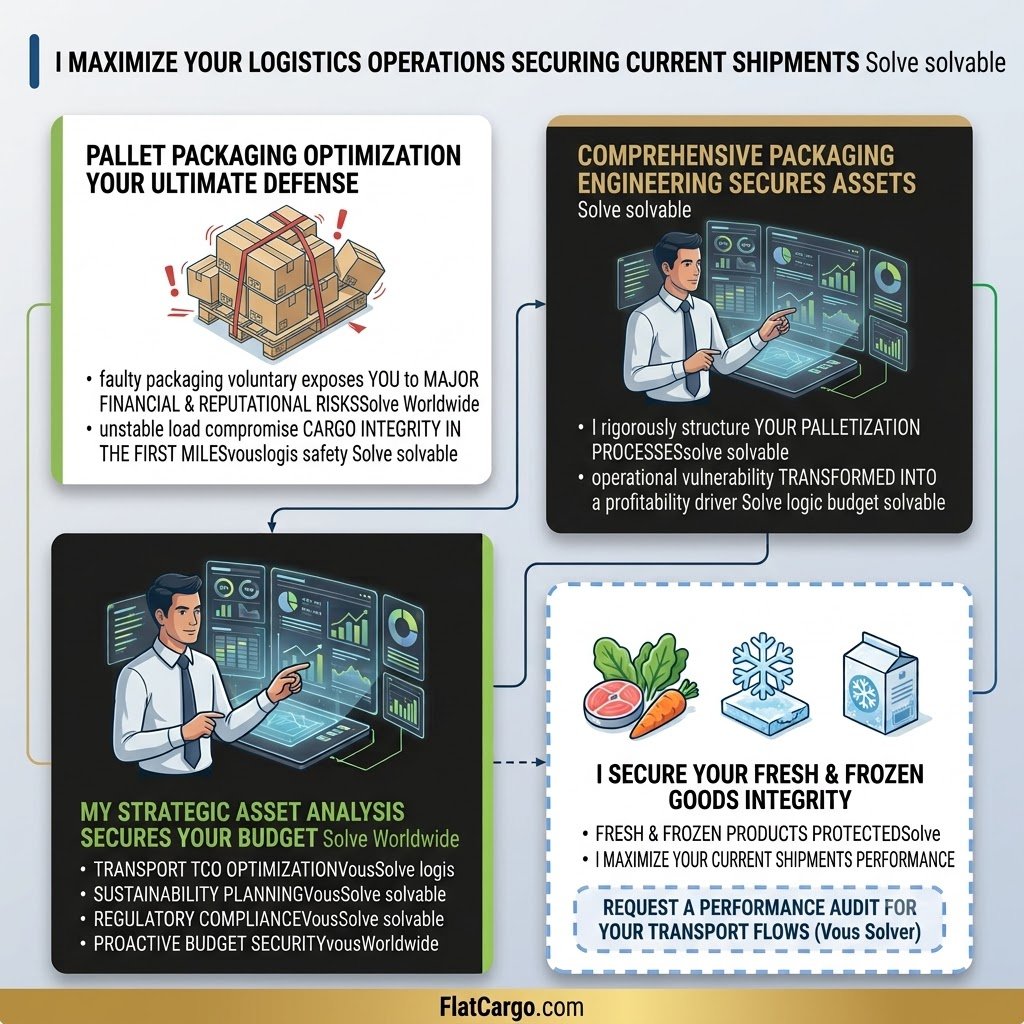
Pallet packaging optimization represents the ultimate line of defense for preserving the value of your goods during transit. In the demanding supply chain sector, tertiary packaging is all too often relegated to a simple operational task. Yet, leaving high-value products to faulty packaging voluntarily exposes your business to major financial and reputational risks. An unstable or poorly protected load compromises cargo integrity within the first few miles of transit.
For logistics and financial decision-makers, it is imperative to approach asset protection from a comprehensive packaging engineering perspective. By rigorously structuring your palletization processes, you transform an operational vulnerability into a profitability driver that secures your current shipments.
Financial consequences of faulty stretch wrapping and cargo securing
Preventing product damage and reducing cargo claim rates
Hidden material handling costs and customer late delivery penalties
| Identified risk | Financial impact | Strategic consequence |
|---|---|---|
| Insufficient wrapping | Increased cargo damage claims | Erosion of customer satisfaction |
| Unstable load securing | Restacking and labor costs | Dock flow disruption |
| Transit delays | Contractual late delivery fees | Brand reputation damage |
Strategies for securing dynamic loads in transit
Consumable selection and stretch film containment force
Weight distribution to guarantee structural integrity
| Optimization parameter | Common palletization error | Corrective engineering solution |
|---|---|---|
| Containment force | Manual under-stretching or poorly calibrated machine | Use of high-performance pre-stretched films |
| Center of gravity | Straight vertical column or asymmetrical stacking | Interlocking patterns and heavy loads at the base |
| Pallet alignment | Goods overhanging the pallet edges | Strict sizing and protective edge boards |
Best practices for pallet packaging optimization
Deploying modern technologies for shipment monitoring
Equipping packaging processes with sensor technology represents a major shift from traditional, trial-and-error methods. Deploying the latest generation of smart, connected stretch wrappers now allows operators to precisely measure the containment force applied to every zone of the load. This equipment automatically adjusts film tension based on the detected fragility of the products, guaranteeing maximum security without structural deformation.
Furthermore, integrating smart shock sensors and tilt indicators directly into the tertiary packaging transforms every pallet into a communicating asset. These devices provide real-time tracking of handling incidents occurring in carrier networks. This analytical visibility gives supply chain managers the power to precisely pinpoint weak spots in their logistics network, eliminating hidden material handling costs and reinforcing the overall reliability of your current shipments.
Stability assessment and warehouse testing protocols
Tilt testing and lateral acceleration simulation
Metrological verification of applied containment force
| Validation method | Operational success criterion | Risk management impact |
|---|---|---|
| Tilt Test (EUMOS Standard) | Zero or less than 5% shift at 26° | Guaranteed tip-over prevention in transit |
| Containment measurement | Consistent containment force (in kg) | Elimination of film creep and instability |
| Stretch wrap audit | No tears or loose film tails | Enhanced security in automated sorting systems |
FAQ on protection and shipping techniques
Deciding between manual stretch wrapping and automatic stretch wrapping
One of the central questions for operations managers is the profitability threshold of automation. Manual wrapping, while flexible for low volumes, presents high risks of inconsistent containment force. A tired or poorly trained operator will apply variable tension, which mechanically increases transit damage rates. Moving to an automatic stretch wrapper becomes strategic as soon as volume exceeds 15 to 20 pallets per day. These machines guarantee standardized film application, consistent pre-stretch, and up to a 40% reduction in consumable usage, securing your current shipments with industrial-grade reliability.
Reducing plastic footprint without compromising cargo safety
Achieving pallet packaging optimization today meets a double requirement of performance and corporate social responsibility (CSR). Reducing plastic consumption does not mean weakening the load. On the contrary, using high-performance, thin-gauge films with superior puncture resistance maintains perfect load cohesion while using less raw material. By targeting the exact containment force required through professional stretch wrap audits, companies can significantly reduce their carbon footprint while eliminating the hidden costs associated with over-packaging in modern logistics.
Strategic impact of logistics packaging
Pallet packaging optimization is a cornerstone of risk management and financial performance. By moving away from empirical methods in favor of an approach based on containment force engineering and dynamic load containment, companies protect not only their goods, but also their reputation and operational margins. Flat Cargo supports supply chain leaders in streamlining their stretch wrapping processes to transform tertiary packaging into a powerful profitability shield, perfectly adapted to the constraints and reliability demands of your current shipments.
Eliminate damage and optimize your packaging costs
Have your wrapping protocols audited by our experts and secure your transport flows for the long term.